
-
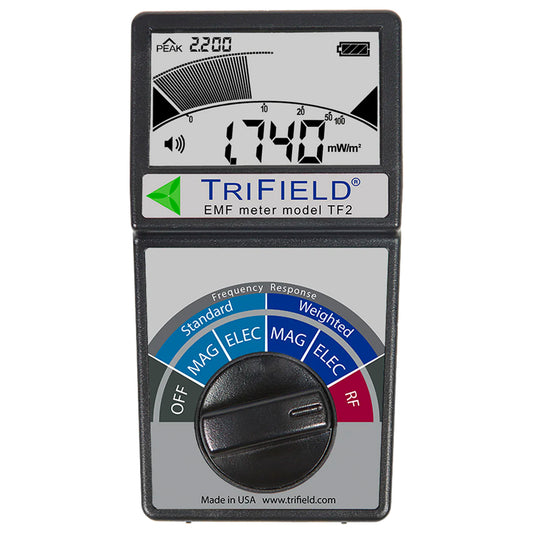
TriField TF2 RF Meter
Regular price $218.90 USDRegular price -
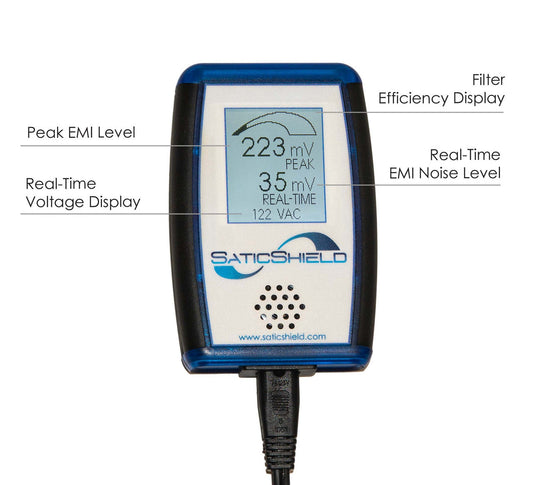
Satic EMI Line Monitor Dirty Electricity Meter for North America
Regular price $219.00 USDRegular price -
EMF Testing Crash Course
Regular price $9.00 USDRegular price -
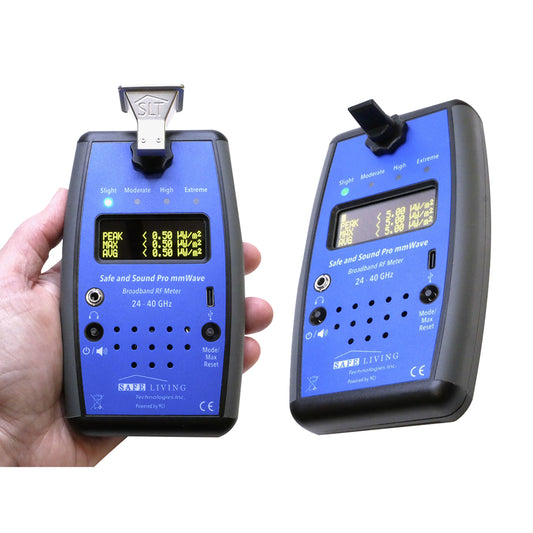
SLT Safe and Sound mmWave 5G Meter
Regular price From $933.90 USDRegular price -
SLT Safe and Sound Classic III
Regular price $185.90 USDRegular price -
SLT Pro RF Meter Kit
Regular price $2,290.64 USDRegular price -
Cornet ED98QPro5G Quad Mode Meter w/Hard Case
Regular price $219.99 USDRegular price -
SLT Safe & Sound Body Voltage Home Test Kit
Regular price $185.90 USDRegular price -
SLT Safe and Sound Micro RF Detector 2.1
Regular price $192.50 USDRegular price -
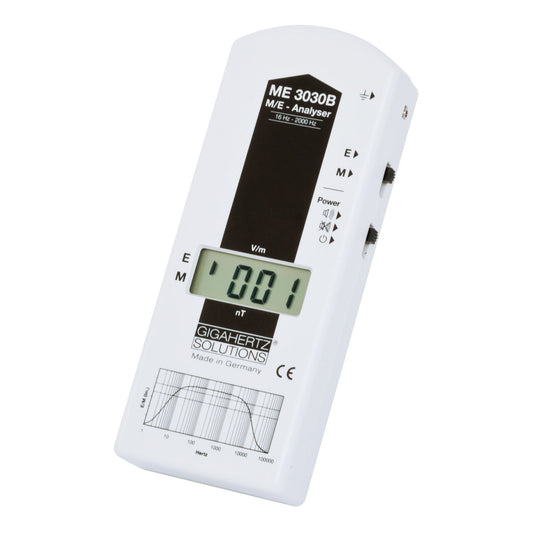
Gigahertz Solutions Electric/Magnetic Field Meter
Regular price From $203.69 USDRegular price -
SLT Safe and Sound Pro II RF Meter - Rechargeable
Regular price $438.90 USDRegular price -
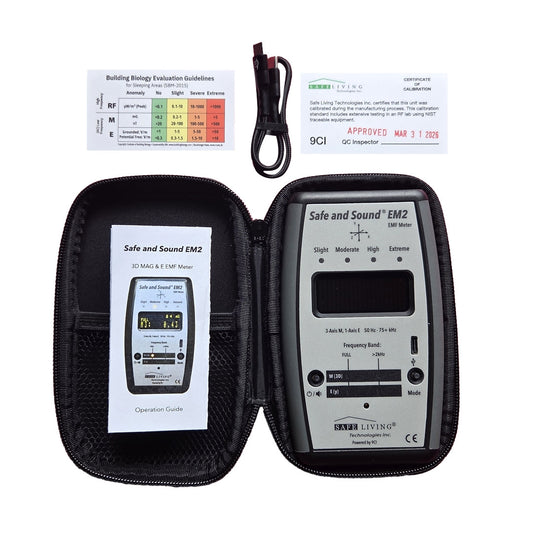
SLT Safe & Sound EM2 - Rechargeable
Regular price $438.90 USDRegular price -
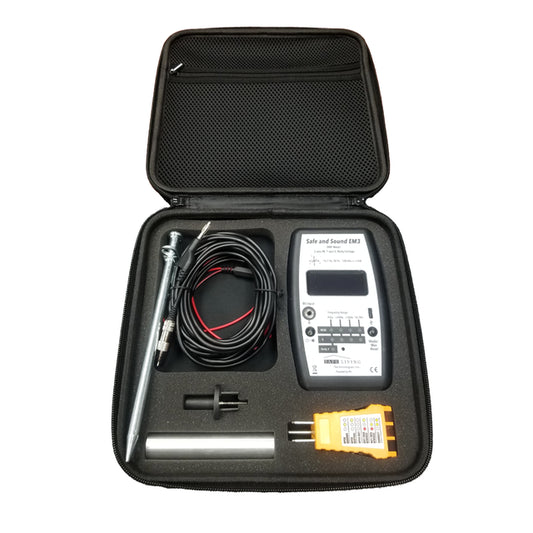
SLT Safe & Sound EM3 - Rechargeable
Regular price $713.90 USDRegular price













Frequently Asked Questions
What types of EMF does each meter measure?
Different meters detect different radiation types. RF meters measure wireless signals (WiFi, 5G, cell towers). Gaussmeters measure magnetic fields from wiring and appliances. Electric field meters detect fields from live electrical sources. Dirty electricity meters measure power line interference. Multi-function meters like the TriField TF2 measure several types in one device.
How do I measure dirty electricity in my home?
Use a dedicated dirty electricity meter like the Satic EMI Line Monitor. Plug it into each outlet and read the interference level displayed. High readings indicate electrical pollution on that circuit. Test outlets throughout your home to identify problem areas, especially near electronics, LED lighting, and dimmer switches.
What EMF readings are considered safe?
There's no universal "safe" threshold, but common guidelines suggest: RF below 0.2 V/m for sleeping areas, magnetic fields below 1 mG for prolonged exposure, and dirty electricity below 50 GS units. Our EMF Testing Crash Course explains how to interpret readings in context of your specific health goals and living situation.
Can EMF meters detect 5G signals?
Standard RF meters detect sub-6 GHz 5G (the most common type). For millimeter wave 5G (higher frequencies), you need a specialized meter like the SLT Safe and Sound mmWave. Check the frequency range specification—5G sub-6 requires coverage up to 6-8 GHz, while mmWave 5G uses 24-40 GHz frequencies.
Should I buy an all-in-one meter or separate specialized meters?
For most home users, an all-in-one meter like the TriField TF2 provides sufficient accuracy to identify sources and verify protection. Professionals and those with specific concerns may want specialized meters for greater precision in one field type. Start with an all-in-one, then add specialized meters if you need deeper analysis.
